Blog
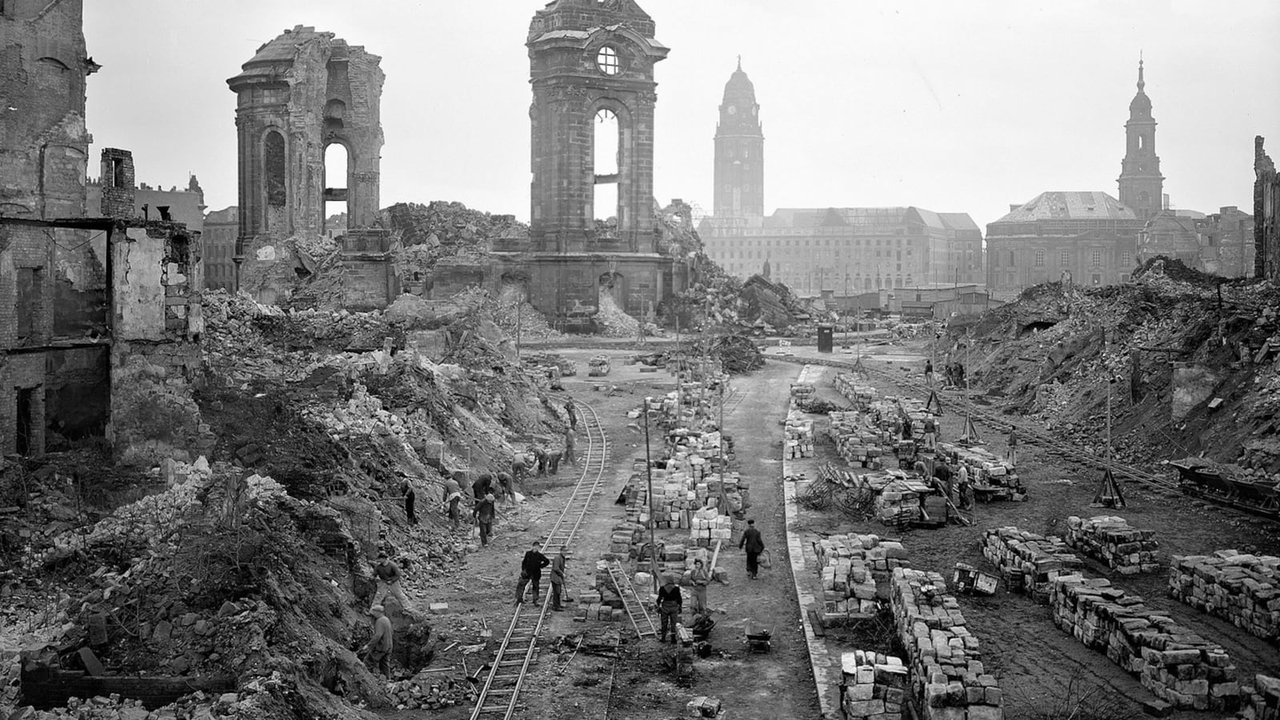
The Frauenkirche Destroyed
Last night at 9:51 p.m., all the bells of Dresden began to ring at once. At that exact time, 61 years earlier, one of the greatest atrocities of the 20th century had begun: the bombing of Dresden.
By the end of the Second World War, Dresden was a city with no military targets and practically undefended: all weapons had been moved to the Russian front, there was no anti-aircraft artillery, and the city had only three decent shelters—the one beneath the house of Gauleiter Mutschmann (the Nazi governor of the region), the one at the Gestapo offices, and one in the home of a wealthy businessman, requisitioned by the SS.
At that time, the city was filled with refugees from the Ruhr valley and other bombed-out or front-line regions of Germany. They came, drawn by the widespread belief that Dresden, the “Florence on the Elbe,” would never be attacked. There were even rumours that Winston Churchill’s aunt lived there, and that he had given strict orders that the city should never be bombed. Meanwhile, children who had been relocated to villages in Saxony under Nazi orders began to return, as their parents feared that when the Russians arrived, their sons and daughters would be abducted or massacred.
When the air-raid sirens sounded, people paid little attention. They had gone off so many times before, usually as false alarms. The circus Sarrasani performance wasn’t even interrupted—it was Carnival Tuesday. When the bombs began to fall, no one knew what to do. Some, as they had been taught, ran to put out the fires caused by the incendiary devices to prevent them from spreading. Others tried to find shelter or fled the city. The flames quickly spread out of control (Dresden’s fire trucks were in Berlin), creating a firestorm—an inferno so vast it generates its own winds and whirlwinds. Temperatures reached more than 3,000 °C. In despair, many people tried to seek safety in fountains and water tanks, but the storm boiled the water and they were scalded alive.
The next day, after two waves of bombers (796 RAF aircraft and 311 USAAF planes), after 4,600 tons of explosives (with a total power greater than the atomic bombs dropped on Hiroshima and Nagasaki), after the firestorm—came silence and grief. More than 25,000 people were killed, and 15 square kilometres of the city were reduced to ruins. From Neustadt in the north to Südvorstadt in the south, from Friedrichstadt in the east to Striesen in the west. What the military calls the “total destruction zone” lay within the rectangle formed by the Elbe River, Sanpetersburgerstrasse, the Hauptbahnhof, and Königstrasse. Inside were all the architectural treasures of the Saxon capital (many of which, once rebuilt, now appear in the photos on this blog). Soldiers and rescue teams built three massive pyres to incinerate the dead and minimise the risk of epidemics: one in Postplatz, another in the Altmarkt, and a third on Pragerstrasse. It is said that SS units with experience from the Treblinka extermination camp lent their “expertise.”
Last night, Dresden’s bells rang out for the victims of the bombing—and as a reminder that such a thing must never happen again.
Posted on 14 February 2006
|
Next post: Day 159: A Name for My Kingdom |
Previous post: Day 152: The Second Exam |