Under the Sea...
I read on sondasespaciales.com:
Steel manufactured after the detonation of the first atomic bomb in 1945 contains traces of radioactive elements. This is because an enormous amount of air is used during the steelmaking process, and that air transfers its radioactivity to the steel. To build radiation detectors, steel free from this additional radiation is required. Where is such steel obtained? Up until now, a good portion of this material has come from the ships of Kaiser Wilhelm II.
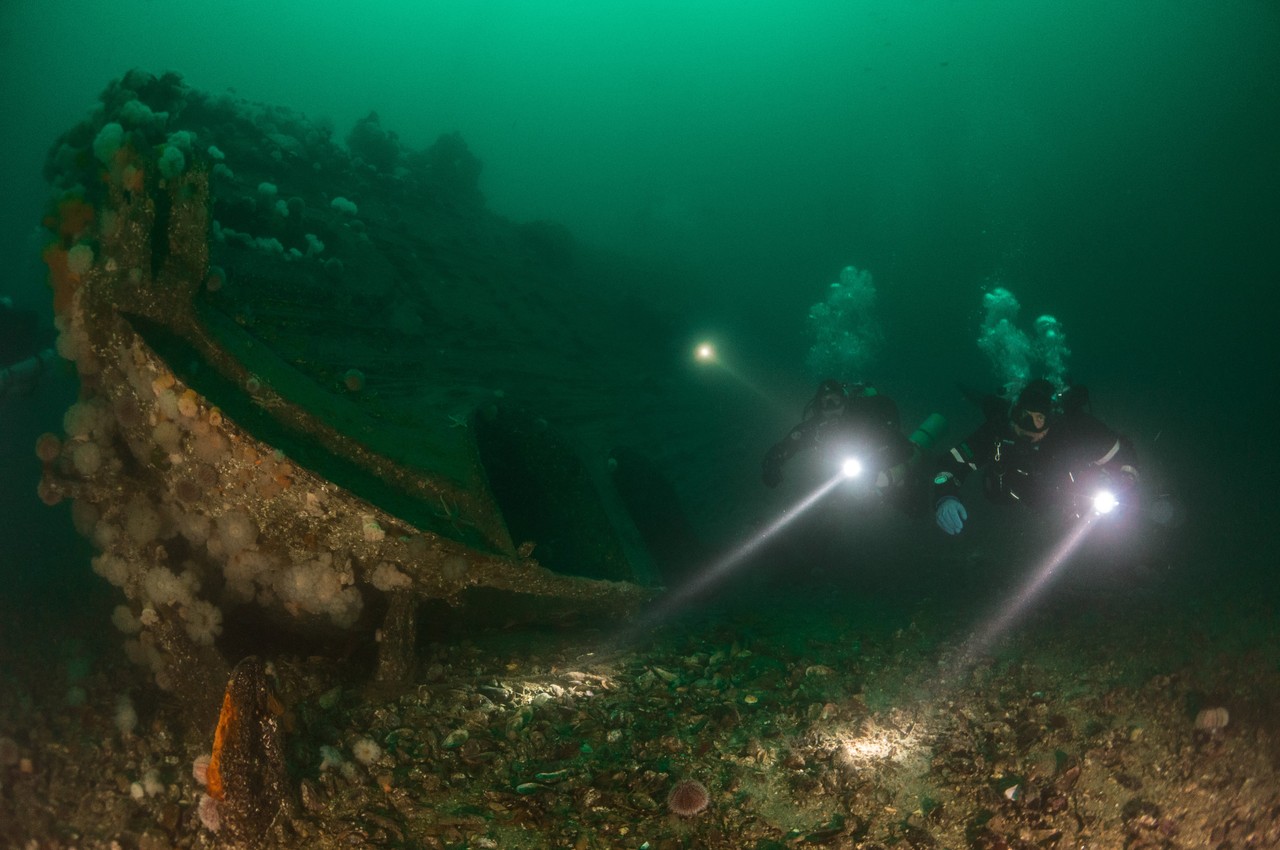
This is how part of the German warships from the First World War made it to the Moon: in 1919, the Imperial German fleet had surrendered to Great Britain and was being held at the Royal Navy anchorage in Scapa Flow, north of Scotland. After several months of anxious waiting, the German admiral believed the British were going to seize his fleet, so he sent a pre-arranged coded signal and the Germans scuttled all the ships. But Scapa Flow is not very deep (which is why it was chosen as an anchorage) and there lay hundreds of thousands of tonnes of very high-quality steel waiting, just a few metres or tens of metres deep. In the 1920s and 1930s some vessels were refloated: divers welded the blown-open holes, giant air chambers were installed, and some of the semi-submerged ships were towed to the docks at Rosyth, in the Firth of Forth. After 1945, what remained took on a special value. A great deal of air is needed to produce steel, and all steel manufactured after Hiroshima contains some of the radiation produced in atmospheric atomic explosions; that made before 1945 does not. Up to that point, three battleships and four light cruisers from what had once been the great Kaiser’s fleet at Scapa Flow (and intrepid readers may dive in those waters to see them) had been recovered. There is no advantage in using such steel for ordinary purposes, as it is far cheaper to produce new steel, but for extremely sensitive radiation monitors such as those used on spacecraft, this steel manufactured before the Hiroshima explosion is indispensable. The equipment left on the Moon by the Apollo mission, as well as part of the Galileo probe that reached Jupiter and even the Pioneer probe, which has already passed the orbit of Pluto and heads into the depths of space—all of them contain part of the Kaiser’s fleet, that steel recovered in Scapa Flow. Dan Van Der Vat told this story in *The Grand Scuttle: The Sinking of the German Fleet at Scapa Flow in 1919*.
Evidently, the price of this steel is very high, which is why the project to recover around one hundred U-boats off the coast of Scotland is economically viable and has been under study since 1995.
|
Next post: Difference between adsorption and absorption |
Previous post: Cetylpyridinium Chloride |